

Houghton Mifflin Harcourt released a press release today (you can read it on Xenite.Org) announcing the impending publication of The Nature of Middle-earth by J.R.R. Tolkien and edited by Carl Hostetter. This book is billed as "a veritable treasure-trove offering readers a chance to peer over Professor Tolkien’s shoulder at the very moment of discovery: and … Continue reading New Tolkien Book to Be Published in 2021
Lectures on Tolkien and Rowling
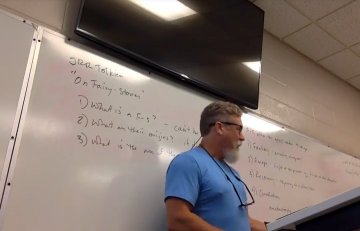
I confess that what led me to these videos was a search for a quote by J.K. Rowling (which I have yet to find at this writing) where, allegedly, she compares her writing to J.R.R. Tolkien's. Please don't read anything into what I just wrote. I wanted to see what she actually said, as apparently … Continue reading Lectures on Tolkien and Rowling
Watch Middle-earth Talk Episode 52 from Tolkien Moot XII
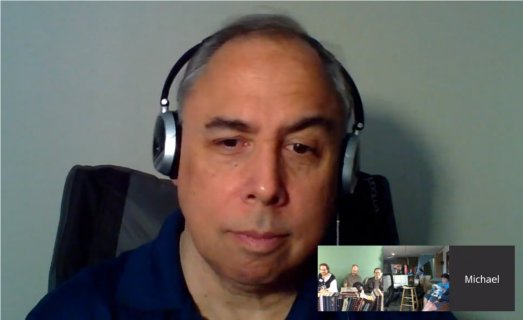
Middle-earth Talk has now become an annual video chat between me and Hawke Robinson, who chairs the Spokane, WA Ea Tolkien Society smial, a chapter of the Tolkien Society. I was able to join them for 90 minutes on July 16, 2016 during Tolkien Moot XII. The chosen topic was undead in Middle-earth, which was … Continue reading Watch Middle-earth Talk Episode 52 from Tolkien Moot XII
Watch Middle-earth Talk Episode 51 from Tolkien Moot XI

Tolkien Moot is the name my friend Hawke Robinson chose when he rebranded the MERPcon gaming convention a few years back. Because of trademark issues Hawke has always kept the conference free, small, and semi-private. You only had to register to attend an he was always asking for volunteers to help. The conference moved to … Continue reading Watch Middle-earth Talk Episode 51 from Tolkien Moot XI
Fan Film: “Tolkien’s Road”, My Review
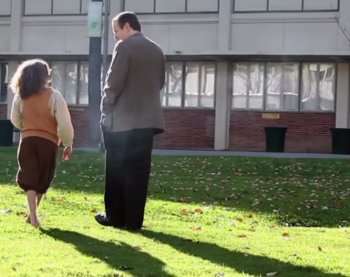
Every now and then you come across something remarkable on the Internet, well worth sharing. "Tolkien's Road" is just such a thing. We'll call it a Silmaril in the rough for it is not perfect but it is certainly very close to perfection. Rather than dwell on the imperfections in such a jewel it is … Continue reading Fan Film: “Tolkien’s Road”, My Review
Xenite.Org Launches New Science Fiction & Fantasy Movies Portal

It has been many years since Xenite.Org updated its science fiction and fantasy movies portal. But now we have and you can browse many hours' worth of videos while catching up on who's who in some of the largest film franchises currently in production. Although the entire site has been redesigned, two new major sections … Continue reading Xenite.Org Launches New Science Fiction & Fantasy Movies Portal
Hwaet? Learn Old English Online and Enjoy Tolkien More!
Online Old English courses may enjoy a new surge of interest from fans of J.R.R. Tolkien as they delve into the depth of the language through his latest book, Beowulf: A Translation and Commentary. Of course, Christopher Tolkien patched the book together from his father's 1926-era translation of the poem into a prose modern English, … Continue reading Hwaet? Learn Old English Online and Enjoy Tolkien More!
English Teacher Takes Students Through Middle-earth
Many teachers now love to read Tolkien to their classes, or include him in reading assignments. And while I am sure there must be many blogs where these teachers share their classroom experiences I don't often stumble across them. Teaching Tolkien is still fairly new, only started in February 2013. The author's bio says of … Continue reading English Teacher Takes Students Through Middle-earth
Tolkien Scholar Divulges Complex History of the Brighton Manuscript
If you have been wondering where to find more information about the Brighton Manuscript, Tolkien scholar Michael Martinez has put together the definitive article summarizing everything that is known about it. Be sure to read What Is the Brighton Manuscript on the Middle-earth blog.
Hawke Robinson’s Middle-earth Network Goes Silent
It has been no secret that Middle-earth Talk Radio has struggled to continue its progressive series of Tolkien-inspired talk shows. Hawke Robinson wanted to achieve so much with the show that he was never really in a position to bring about. The show was always supposed to feature guests but more often than not was … Continue reading Hawke Robinson’s Middle-earth Network Goes Silent
New Video Series: The MERPCon and Tolkien Moot Lectures
Technically, the videos are not being promoted as a "MERPCon and Tolkien Moot Lecture Series" but that is what they are. Lectures from Tolkien scholars and researchers given at the Spokane, WA MERPCon (Middle-earth Role-playing) through the years. MERPCon was formally held in the years 2005-2009, number I..V successfully. In 2010 Hawke Robinson rebranded the … Continue reading New Video Series: The MERPCon and Tolkien Moot Lectures
On the Interviews with the Scholars Series
This week I have published the latest and (for now) last in my series of interviews with Tolkien scholars at the Xenite.Org Middle-earth Website. I invite you to read An Interview with John Garth. Although I do hope to do more interviews with Tolkien scholars later this year I was forced to stop the project … Continue reading On the Interviews with the Scholars Series